Five years ago, "good enough" was a defensible position for a Tier-2 plastic supplier. Today, the same philosophy will get you removed from an OEM's vendor list within a quarter. Here's what changed — and why every Hitshi component now ships with a digital passport.
Why precision became table-stakes
The shift didn't happen overnight. It came from three forces compounding at once: electric vehicles raising the bar on component tolerances, automotive supply chains becoming radically transparent post-COVID, and OEM purchasing teams adopting quality-first procurement scoring over pure cost-per-unit comparison.
The result? A mid-tier plastic component is now scored on six dimensions before it gets approved: dimensional accuracy, surface finish, material consistency, traceability data, supplier audit grade, and lead-time reliability. Cost is the seventh — and often the least weighted. We've watched suppliers with 12% lower pricing lose contracts to us simply because they couldn't produce the test certificate trail an OEM needed.
For every 1% cost a buyer saves on the lowest-bid supplier, they typically absorb 6% in NCR (non-conformance report) handling, sorting, rework and missed deadlines downstream. Modern OEMs have started measuring this — and pricing it in.
The dimensional accuracy revolution
A decade ago, ±0.2mm was acceptable for a plastic battery cover. Today, our latest generation of presses holds ±0.05mm across a 200mm span — a four-fold tightening. That sounds incremental until you understand what it enables: snap-fit assemblies that don't need adhesive, weld lines that pass UV exposure tests, and parts that interchange across production batches without re-tooling.
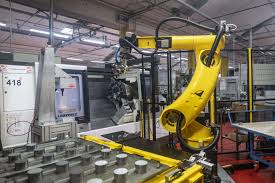
How do we get there? Three things: closed-loop hydraulic control on every press, real-time temperature mapping on the mold cavity, and statistical process control (SPC) data captured on every shot. None of these are exotic anymore — but they're the difference between shipping good parts and shipping predictably good parts.
Material selection — beyond polymer choice
When a customer says "make it in PP," our first response is always: which PP? There are over 200 commercial polypropylene grades. The right one for a food-grade container is wrong for a battery cover. The right one for a battery cover would warp on a thin-wall electronics housing.
Material selection at OEM-grade now accounts for:
- Melt flow index (MFI) — controls how the polymer fills thin-wall sections and how clean weld lines form.
- Filler content and type — glass fiber, talc, calcium carbonate each change stiffness, weight and impact strength differently.
- UV and heat stabilizers — non-negotiable for parts that see underhood temperatures or outdoor exposure.
- Recycled content (PCR) — many OEMs now require minimum 25% PCR; but PCR shouldn't be used in load-bearing or safety-critical parts.
- Food-contact certification — FSSAI / FDA / EU 10/2011 compliance for any container touching consumables.
Why traceability matters now
Every part we ship now carries a batch ID that links back to: (a) the polymer lot number and supplier, (b) the press it was molded on and the operator on shift, (c) the SPC data for that shot, (d) the QC inspector's sign-off, and (e) the dispatch trail.
This isn't theatre — it's how OEMs handle field failures now. When a defective batch is identified six months downstream, we can isolate exactly which run produced it and contain the recall to a few hundred units instead of a quarter's production. Without traceability, you recall everything. With it, you recall what you must.
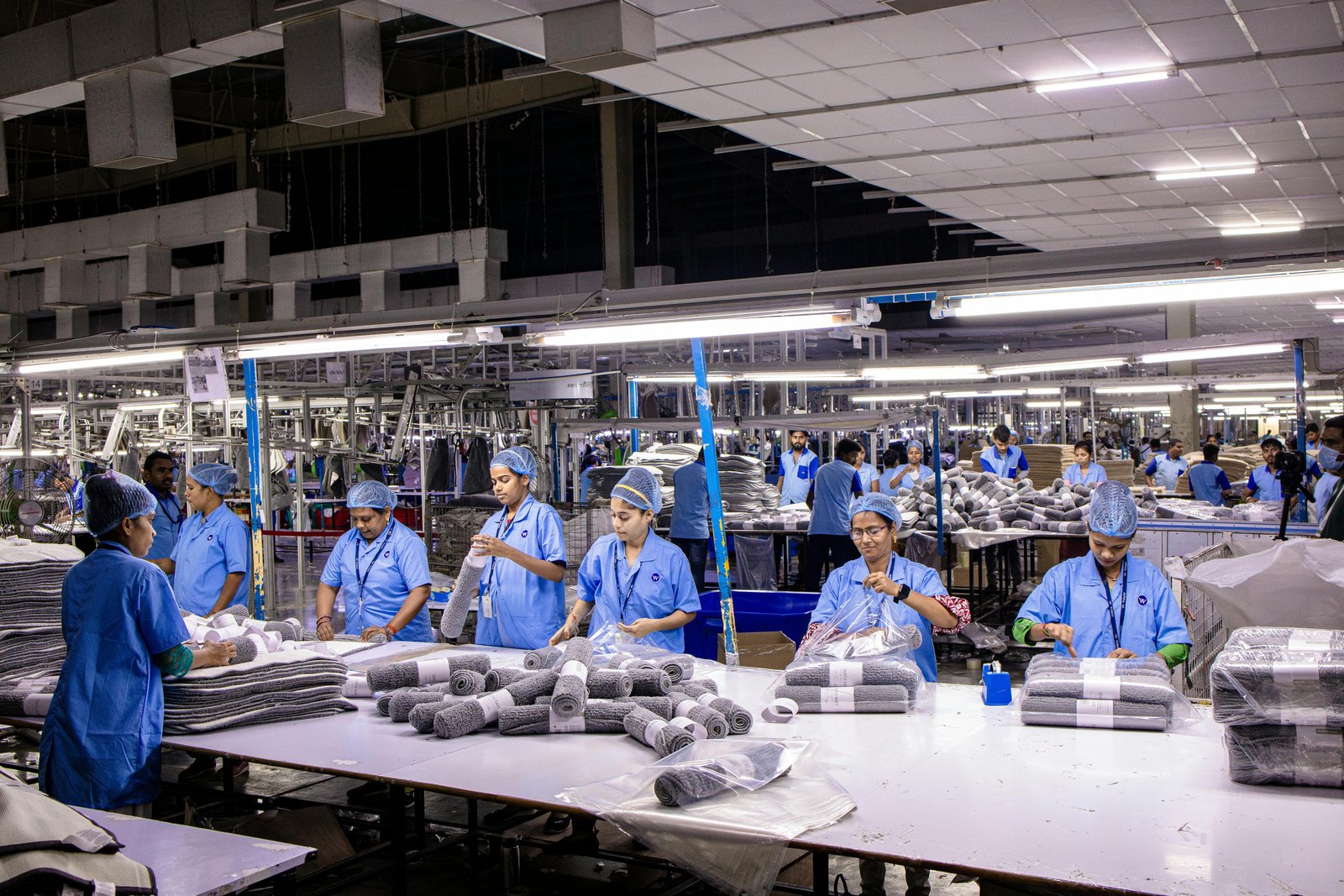
Each batch sample is tagged, tested and archived for 24 months.
The 5 OEM-grade tests we run on every batch
- Tensile strength & elongation ASTM D638 — pulls a dogbone sample to failure to confirm material behaves to spec under load.
- Drop impact (Izod / Charpy) Pendulum strike on a notched sample tells us how the part survives shipping shocks and field abuse.
- Dimensional check (CMM) Coordinate measuring machine logs every critical dimension and overlays it on the CAD model.
- Weld-line integrity Where two melt flows merge, we tension-test the seam to ensure it's not the weakest point.
- Accelerated aging (UV + heat) 500 hours of UV-A exposure plus thermal cycling between -20°C and 85°C — what one year outdoors does in three weeks.
What this means for procurement teams
If you're sourcing molded plastic components today, the questions worth asking your shortlisted suppliers have shifted. Don't ask about price first. Ask:
- What's your first-pass yield and how do you measure it?
- Can you provide batch-level test certificates with each shipment?
- What's your typical NCR rate, and how do you handle corrective actions?
- Show me your SPC data for a comparable part you've run.
- What's your average changeover time between molds?
Suppliers who answer these confidently are typically running tighter operations. Suppliers who deflect with "we'll handle it, don't worry" are usually the ones who'll quietly absorb the cost of poor quality into your downstream operations.
Where we're headed
The next frontier is closed-loop quality data — every press streams its SPC and temperature data to a central system, and the system flags drift before it produces an out-of-spec part. We're rolling this out across our cells through 2026. By the end of next year, every Hitshi component will carry not just a batch ID, but a real-time quality fingerprint that customers can verify against on dispatch.
That's the bar now. Anything less and a Tier-1 OEM won't sign your vendor agreement. The good news is, the technology is accessible — and the operational discipline is learnable. The harder part is committing to it before the market forces you to.